Architecural Screens
Fixing Systems
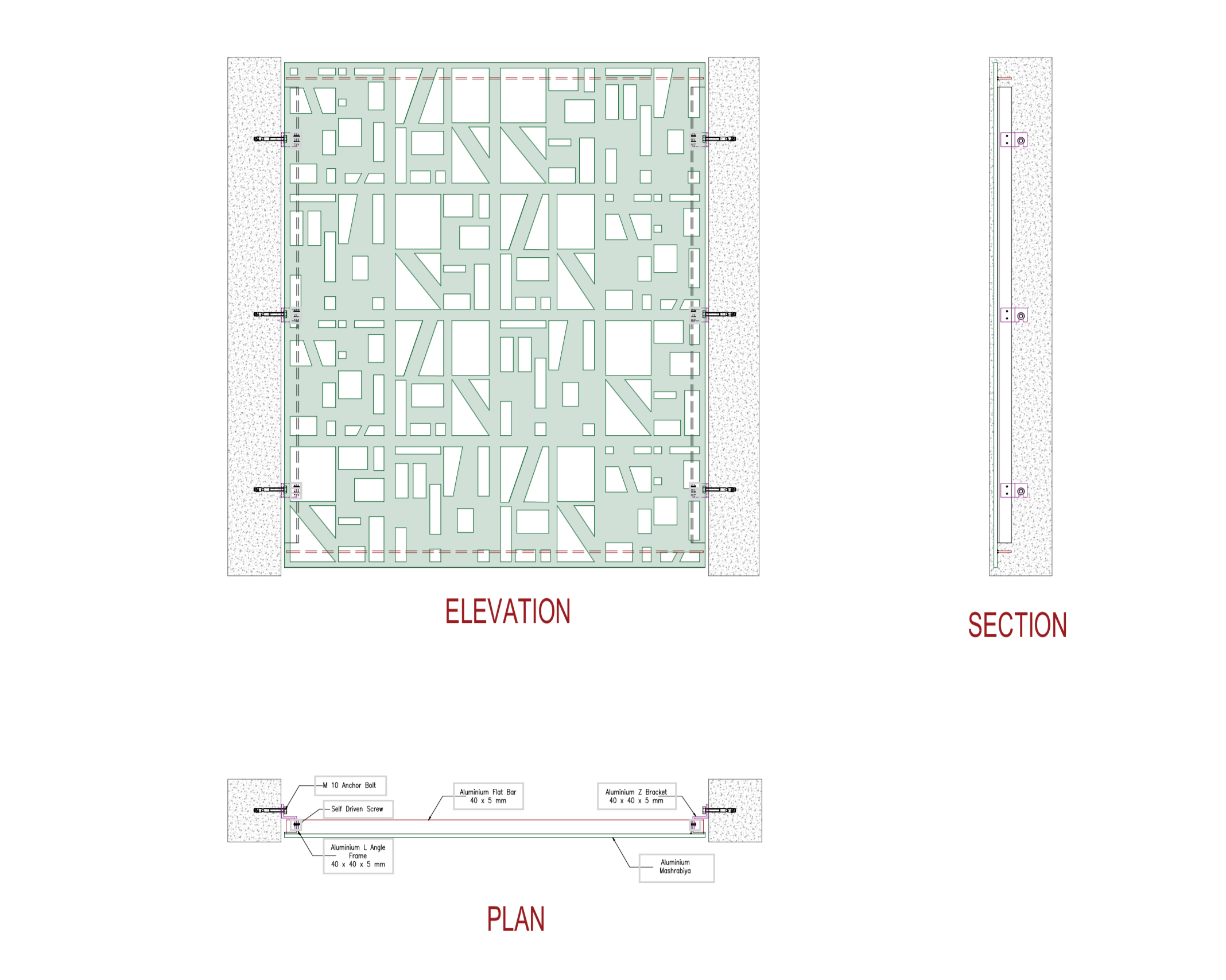
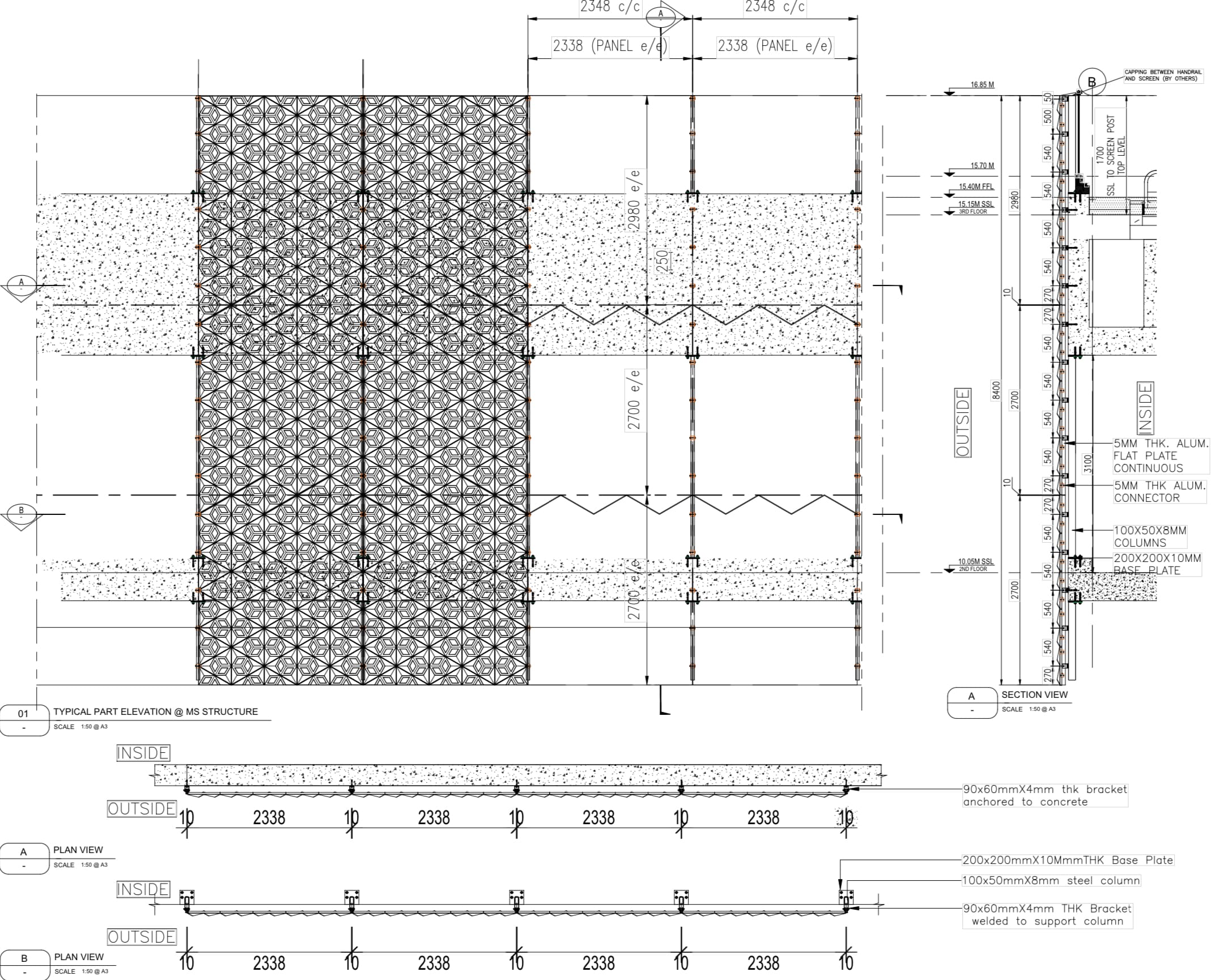
Aluminium screens used in facade applications require robust and aesthetically pleasing framing systems that ensure both structural integrity and visual appeal. Below are descriptions of common framing systems used for this purpose:
L-Profile Framing: L-profile framing is a widely used method for securing aluminium screens on facades. The L-shaped metal profile provides a strong, right-angle edge that supports the screen while maintaining a sleek, modern appearance. This type of framing is particularly effective for creating clean lines and ensuring a seamless integration with the building’s architecture.
Channel Framing: Channel framing involves encasing the edges of the aluminium screen within a U-shaped channel. This method provides a secure and concealed grip on the screen, enhancing its structural stability. The channel can be made from the same material as the screen or a contrasting one, depending on the desired visual effect. It is ideal for large or heavy screens, as the encasement offers additional support. It is commonly used in high-wind areas or where the facade needs to withstand significant environmental stresses.
T-Profile Framing: T-profile framing uses a T-shaped metal profile to create a central support line across the screen. This method not only reinforces the screen but also introduces a design element that can be used to break up large surfaces or add visual interest. It is particularly useful for dividing large screens into smaller sections or creating patterns on the facade. It is a popular choice in modern architectural designs where both function and form are considered.